






Feeding & Picky Eating
Mealtimes should not be a battle. Small, steady steps help children get comfortable with new foods.
Quick tips
- Put a new food on the plate next to a familiar one, with no pressure to eat it.
- Keep mealtimes calm and predictable: same place, same routine, screens off.
- Let your child touch, smell, and play with food. Getting comfortable with a food counts, even if it is not eaten yet.
Speech & Language
Everyday conversation is the best practice there is. These habits help children learn to understand and to talk.
Quick tips
- Describe what you are doing in short, simple sentences while you cook, dress, or play.
- Pause and wait a few extra seconds before filling in a word. Your child needs that time to try.
- Expand on what they say: if they say “ball,” you say “big red ball.”
Sensory, Motor & Self-Care
Fine motor skills, body awareness, and everyday independence grow through play, movement, and practice.
Quick tips
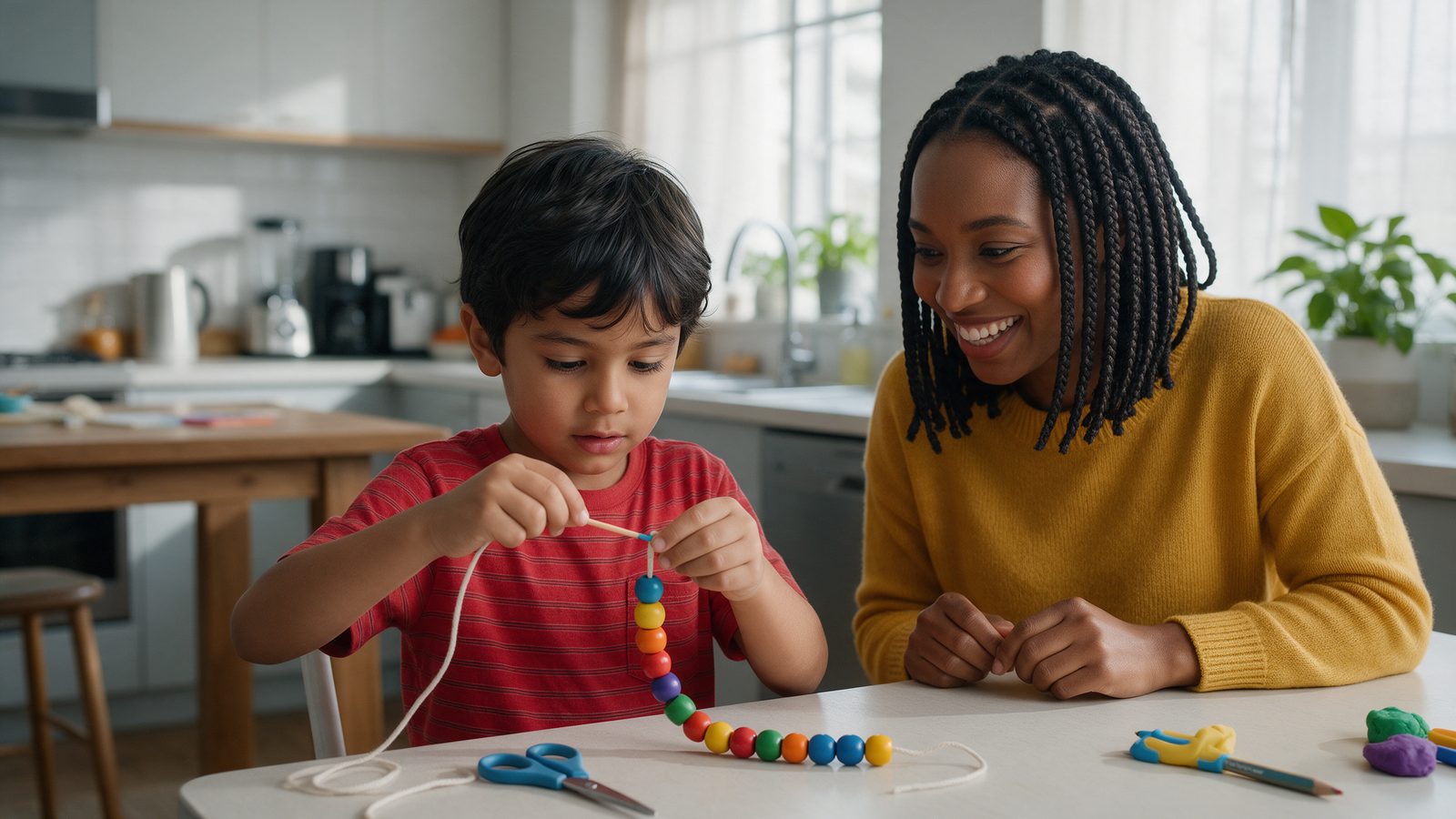
- Build fine motor strength with playdough, stickers, tongs, and stringing beads.
- Offer short movement breaks, such as jumping, crawling, or carrying something heavy, before sit-down tasks.
- Give extra time for self-care steps like zipping or scooping, and let your child try before you help.
Articles
Play & Everyday Routines
You do not need special equipment. Daily routines and play are full of chances to practice.
Quick tips
- Follow your child’s lead in play, and join in with their toy and their idea.
- Turn routines such as bath time, snack time, and getting dressed into short practice moments.
- Short and often works better than long and rare: a few minutes, a few times a day.
When to Reach Out
If something feels off, it is fine to ask. Early questions are easier than waiting and wondering.
Quick tips
- Trust your instincts. Asking early costs very little, and a quick conversation can ease your mind.
- Write down what you notice (words, foods, situations) to share with a therapist or your pediatrician.
- You do not need a diagnosis to ask a question. A free consult is a good first step.
Articles
Articles for this topic are on the way. Check back soon.
The tips on this page are general information for families and are not medical advice. Every child is different. If you have a concern about your child, talk with a licensed professional or contact us for a free consult.