Support for the back-and-forth, unwritten rules of conversation — turn-taking, topic maintenance, reading social cues, and adjusting language to different listeners.
Social communication is the everyday skill of adjusting how we talk based on who we're talking to, where we are, and what we're trying to accomplish — greeting a teacher differently than a sibling, taking turns in a conversation, reading someone's tone or body language. Most children pick up these unwritten rules naturally, just by being around people. A child with a social communication challenge needs to be taught skills that usually develop on their own.
 Social communication can feel hard even when the words are there.
Social communication challenges tend to show up in a few recurring ways.
Because autism and social communication disorder both involve difficulty with social communication, a diagnosis usually starts by ruling autism out. The key difference is that autism also involves restricted interests and repetitive behaviors, while social communication disorder doesn't — it's specifically about the social use of language, without those additional patterns. The exact cause of social communication disorder isn't fully understood yet, though research points to some genetic overlap with autism and possible differences in brain structure. It can be a lifelong pattern, but early, consistent intervention leads to real, lasting improvement.
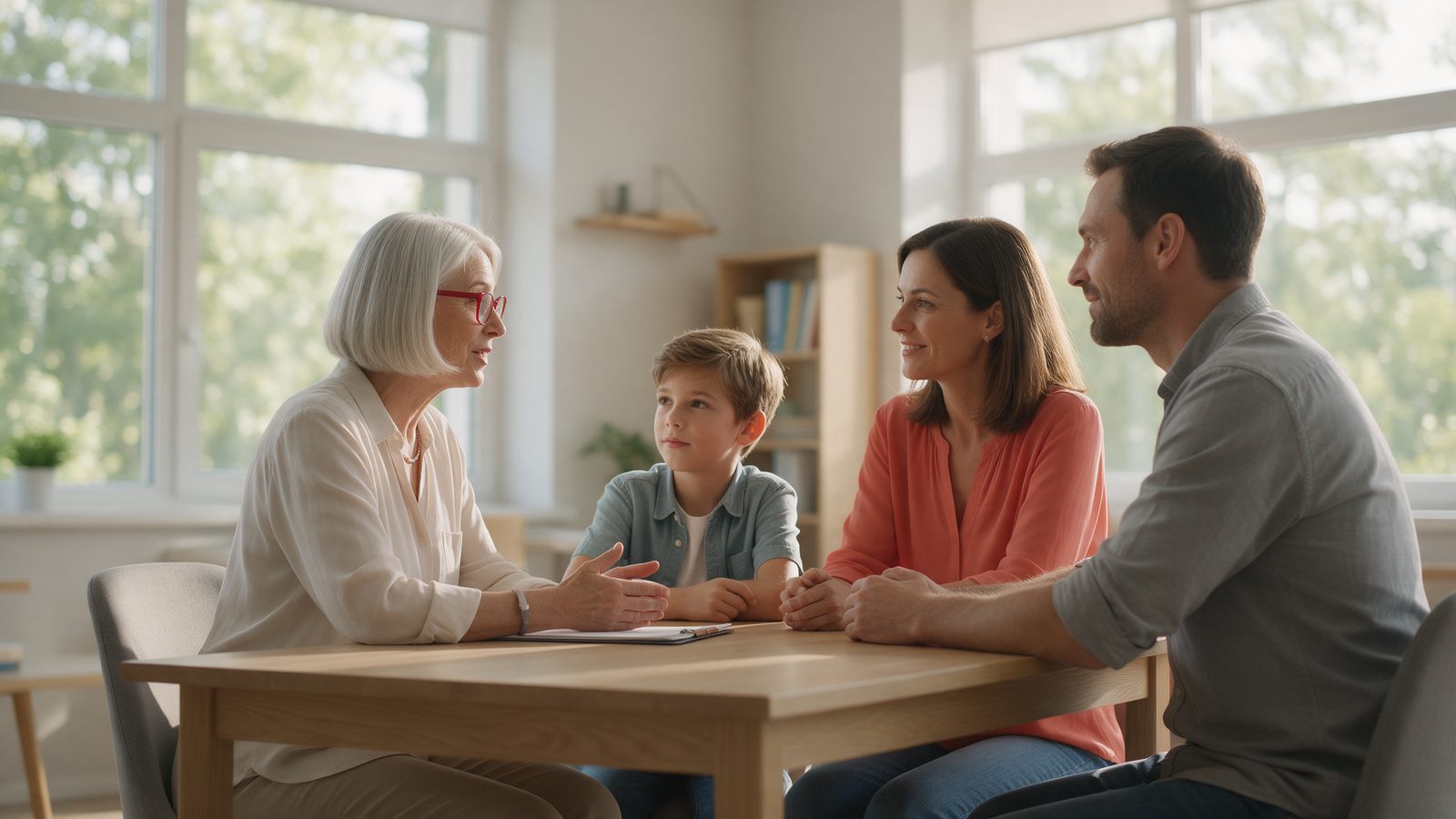 A careful evaluation helps tell the difference between diagnoses.
A speech-language pathologist evaluates how a child communicates across different situations and builds a treatment plan around the specific skills they need — reading social cues, adjusting language for different listeners, or following the rules of back-and-forth conversation. Family involvement makes a real difference here, so we work closely with parents, teachers, and other people in a child's life to help new skills carry over outside of sessions.
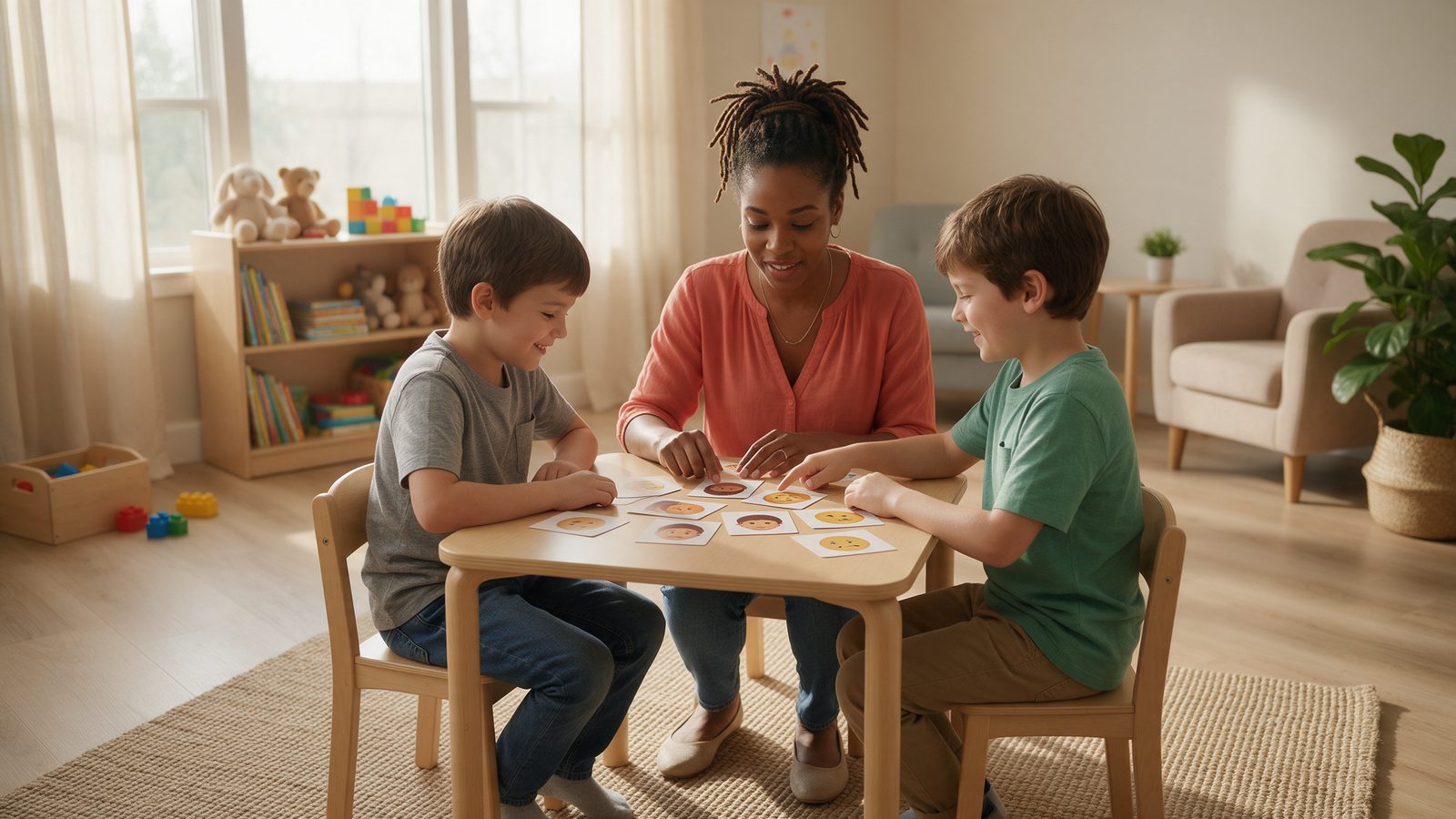 Therapy builds skills through games and role-play.
A few simple activities can build social communication skills at home.
 Everyday family conversations are great practice.
Call, text, or fill out our form — we'll set up your free consultation within 24 hours.