Strategies for children who hear normally but have difficulty processing or making sense of what they hear, especially in noisy environments.
Auditory Processing Disorder (APD) isn't a hearing problem in the usual sense — a child with APD can hear sound just fine, loud and clear, but their brain has trouble making sense of what it's hearing, especially speech. A simple instruction like "please raise your hand" might come through as something else entirely, which can look like inattention or a language delay when it's really about how sound is being processed.
 Background noise can make listening exhausting.
APD tends to show up in a few recognizable ways.
A few things are linked to a higher likelihood of APD.
Diagnosing APD involves a battery of specific listening tests, each targeting a different piece of how the brain handles sound: auditory figure-ground testing (understanding speech against background noise), auditory closure (filling in gaps in what's heard), dichotic listening (processing two different messages at once, one in each ear), temporal processing (following timing, rhythm, and intonation in speech), and binaural interaction (locating where a sound is coming from and using both ears together). For younger children, some of this can be assessed using non-invasive electrodes that measure how the brain responds to sound.
Treatment typically combines a few approaches: auditory training to help the brain analyze sound more effectively, compensatory strategies like visual aids and memory techniques, and practical environmental changes — reducing background noise, using assistive listening devices, or simply positioning your child closer to whoever's speaking in important moments.
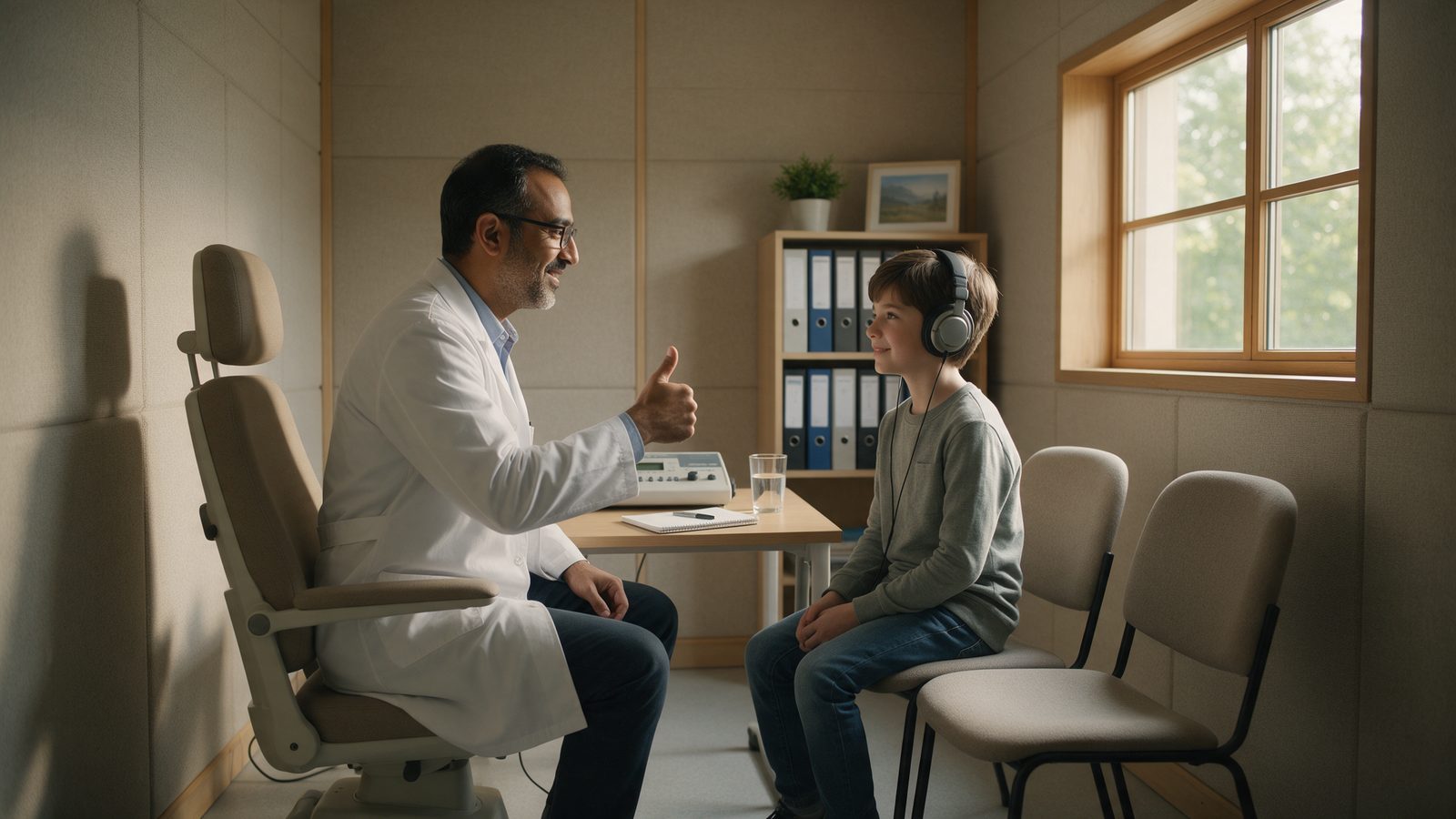 A full evaluation maps where listening breaks down.
A few habits go a long way in everyday listening situations.
 Quiet spaces and short instructions help.
Because APD can touch listening, learning, and emotional well-being all at once, the most effective support often draws on more than one kind of professional.
 Teachers can make a big difference with small changes.
Call, text, or fill out our form — we'll set up your free consultation within 24 hours.