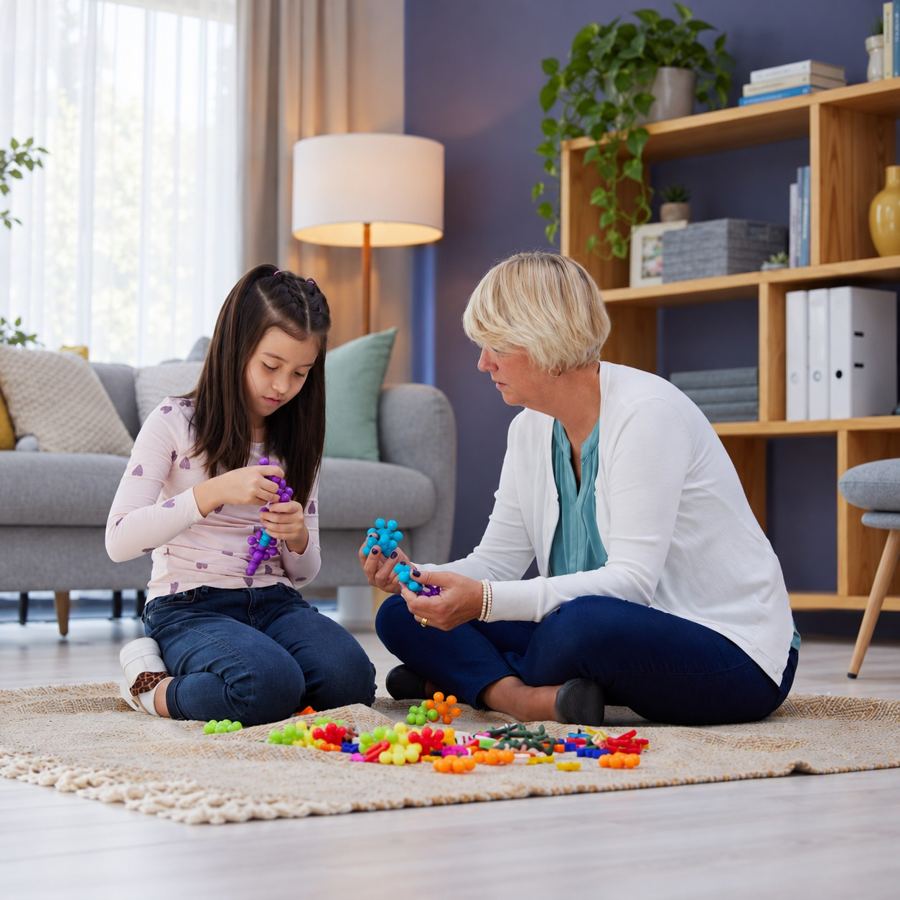
Occupational therapists help adults achieve independence despite cognitive or physical limitations — supporting self-care, household tasks, meal preparation, computer use, and leisure activities, while working with caregivers to adapt the home environment.
Occupational therapists don't just help kids build independence — they help adults manage cognitive and physical challenges so they can participate fully in daily life, despite any limitations. Generally, this means supporting fundamental self-care activities, along with things like household chores, meal preparation, computer use, and leisure activities. Therapists work closely with caregivers to modify these activities and environments, so adults can take part in them comfortably.
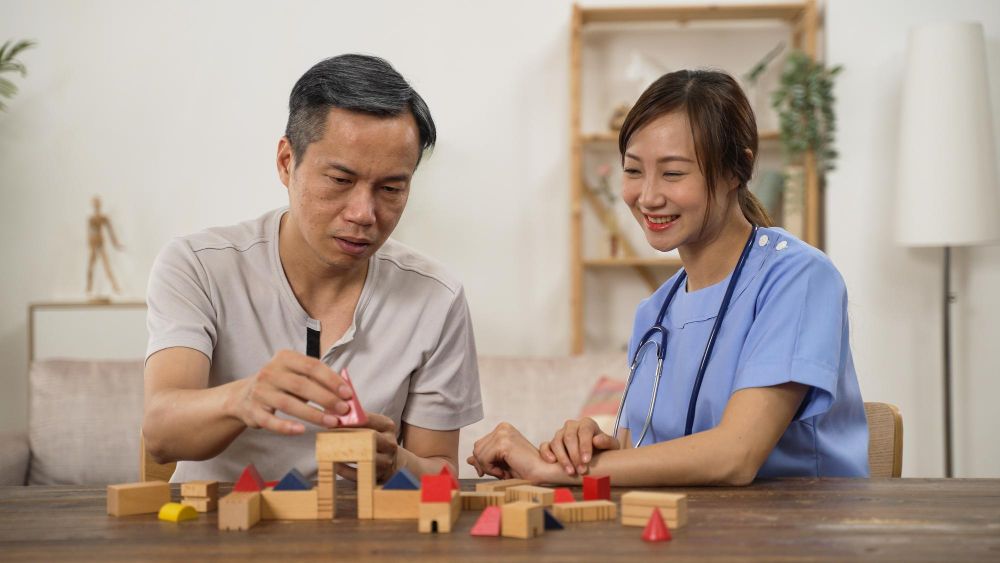
Caring for someone with a developmental delay, injury, or cognitive difficulty gets more complicated as they grow into adulthood — it becomes harder to physically assist an adult the way you might a child, and adults understandably want their own independence and space. An occupational therapist helps adults build independence across a range of everyday activities.
Building the strength, balance, and confidence to move safely from room to room and up and down stairs.
Supporting safe, confident movement through the neighborhood — sidewalks, curbs, and getting to nearby places independently.
Showering, grooming, and other personal care activities, adapted so they're safe and manageable day to day.
Meal preparation, laundry, and other everyday home tasks, tailored to the person's abilities.
Getting back to the hobbies and outdoor activities that matter, with whatever adaptations make them possible again.
Safety is a major part of adult occupational therapy. Therapists help in several ways.
Recommending safer ways to do everyday activities, reducing unnecessary risk.
Assessing safety issues at home and addressing possible trip hazards before they cause a fall.
Suggesting adaptive aids and equipment that make daily tasks easier and safer to manage.
Training caregivers on how to safely support day-to-day care.
Advising on home modifications that reduce risk and support lasting independence.
Adult and pediatric therapy are fundamentally different. A two- or three-year-old communicates very differently from a twenty-year-old, and adults need a level of privacy that isn't a concern for a young child. Even when the underlying condition is similar, a therapist has to adapt the approach to the person's age and life stage — helping a toddler build the focus to sit through an activity looks completely different from helping a fifteen-year-old manage homework, grooming, and friendships, or helping a thirty-year-old manage the demands of a job. An occupational therapist for adults adapts to whatever stage of life the person is actually in.
With adult clients, therapists often work on organization, planning, computer skills, interview skills, and strategies for managing anxiety — all customized to the person's actual role and circumstances. The goal is helping someone feel like a genuine part of their family and community: building the independence to take care of themselves and hold a job.
Occupational therapy for seniors is its own specialty, supporting the physical, emotional, psychological, and environmental needs that come with aging. A therapist evaluates a senior's specific condition and builds a plan of activities and modifications around it.
Arthritis pain generally flares when a joint is in motion. An occupational therapist recommends modifications to make a home or workstation safer and more comfortable, and helps find more comfortable positioning for affected joints.
Occupational therapy can help slow cognitive decline and sharpen memory — often through simple exercises like reading or crossword puzzles. Starting early makes the biggest difference.
Vision therapy techniques help the brain and eyes function better together, without surgery — addressing issues like lazy eye, double vision, dizziness, and reading difficulty.
Range-of-motion exercises help reduce stiffness and pain, making it easier to move, lift, and go about daily activities comfortably.
Some of the toughest transitions in life happen later in it — retirement, relocation, widowhood, and the loss of friends and family. Occupational therapy helps seniors navigate these transitions by building activities that ease loneliness and support adjustment to a new stage of life.
Chronic pain in older adults can come from ordinary aging, traumatic injury, nerve damage, or slow-healing injuries — and left unmanaged, it can take away a person's independence over daily activities. Occupational therapists use a combination of approaches to manage pain and build adaptive routines around it:
Seniors often downplay how they're really doing to avoid worrying their own adult children — but an occupational therapist can be someone they're more comfortable opening up to about the challenges they're facing. Therapists are trained to have these conversations and to find practical solutions that improve a senior's day-to-day comfort, without the emotional weight that can come with confiding in family.
Whether it's a child, an adult, or a senior working through a developmental delay, an injury, aging, or another condition, the goal of occupational therapy is the same: building the specific skills someone needs to do more, every day. Therapists work hand in hand with families and caregivers to help the people they treat find real independence and confidence — at home, at school, or at work.
Book a free consultation and let's talk about your needs.