Therapy for conditions such as dysarthria and apraxia that affect how clearly a person can produce speech, rebuilding the strength, coordination or planning that speech needs.
Speaking starts with an idea, a plan for how to express it, and finally the physical act of producing it — and that last step relies on precise coordination between the brain and the muscles of the tongue, jaw, lips, and more. A motor speech disorder develops when something interferes with either the planning side of that process or the muscles themselves. The two main types are apraxia and dysarthria, and common underlying causes include brain injury, muscle weakness, and degenerative disease. Beyond the communication challenges themselves, motor speech disorders can weigh on a person's self-esteem and overall quality of life.
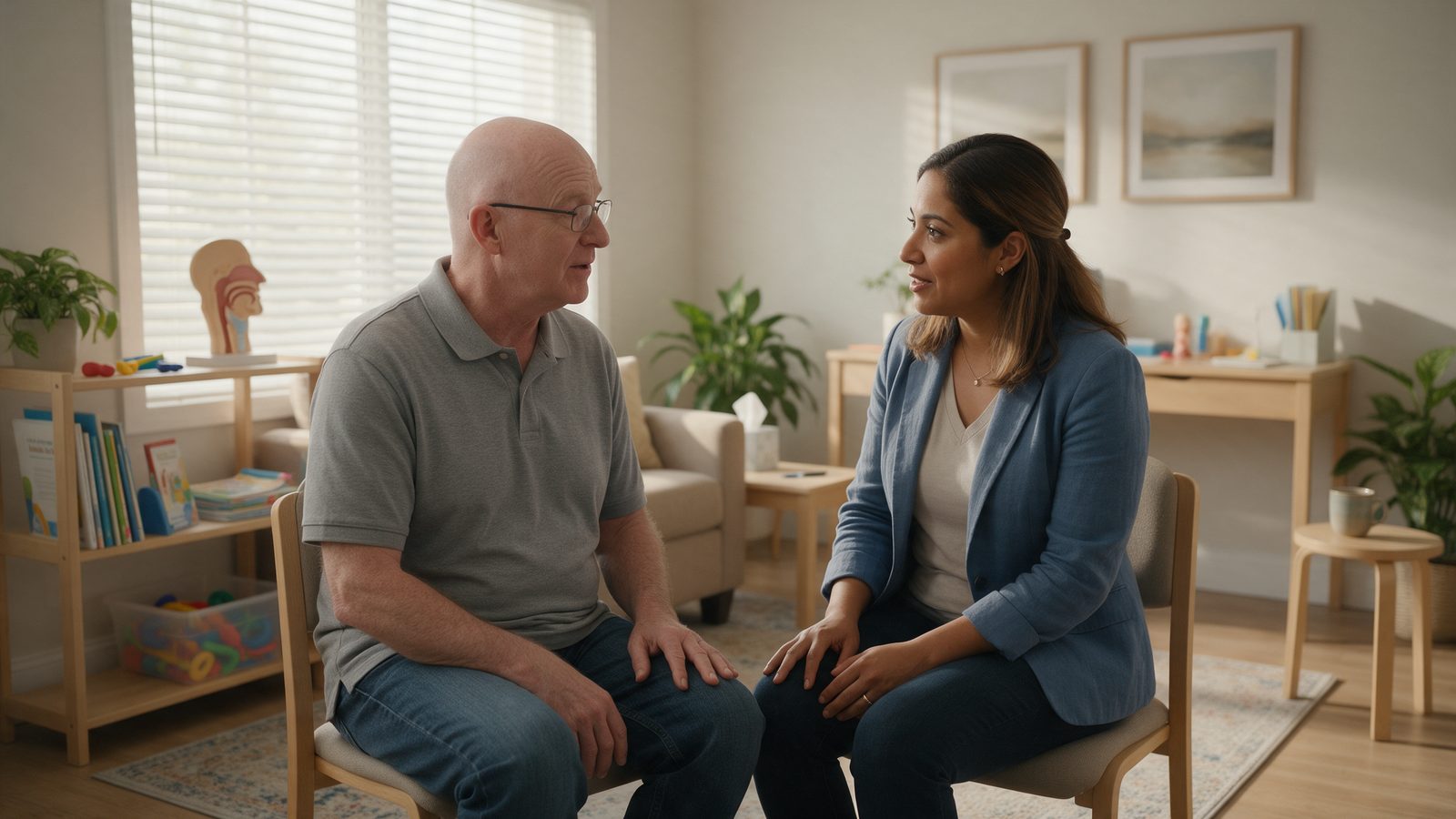 Motor speech disorders affect the muscles and planning behind speech.
The two primary motor speech disorders show up quite differently.
Someone with a motor speech disorder may clearly be trying to form words but struggle to get them out clearly — often managing a single word fine, only to lose clarity as a sentence goes on. Specific symptoms vary with the type and severity of the disorder.
We start with a comprehensive speech and language evaluation to determine the severity and nature of the disorder — many people with a motor speech disorder also have other communication challenges tied to an underlying neurological condition, so the full picture matters. From there, we build a customized treatment plan aimed at improving speech ability and overall communication.
Apraxia of speech develops from damage to the part of the brain that controls how we speak, and patients often struggle specifically with sequencing the sounds within words — even though they know exactly what word they want to say. Treatment typically involves retraining the speech muscles to produce sounds correctly and string them together into words, using repeated practice with vowels, syllables, words, and phrases, along with training to slow speech down enough to produce every sound clearly.
 Therapy starts with how each sound is made.
Dysarthria develops when the muscles of the face, mouth, or respiratory system weaken or stop moving properly, usually after a brain injury or stroke, and its severity and specific presentation depend on which part of the brain was affected. We evaluate lip, face, and tongue movement, along with breath support and voice quality, and build a customized plan around the specific symptoms present.
 Slow, steady speech is clearer speech.
The core of treatment is speech therapy exercises that strengthen the muscles responsible for producing speech sounds, often combining several specific techniques.
Dysarthria symptoms vary depending on which part of the brain was affected and the type involved — common signs include slurred speech, altered voice quality, whispered speech, and reduced tongue or facial muscle movement. Apraxia, by contrast, typically shows up as inconsistent sound errors, trouble repeating words accurately, and general difficulty producing sound. Because symptoms differ so much from person to person, we build a specialized program for each patient, generally working toward these goals.
 Clear goals, built around each person.
A speech-language pathologist becomes an important part of your life as they help you communicate more easily with family and friends, so finding the right fit matters. We offer consultation, thorough screening, and treatment for motor speech disorders as a specialized, family-oriented practice, with a strong emphasis on caregiver education and training alongside direct work with the patient.
 Progress is built one conversation at a time.
Call, text, or fill out our form — we'll set up your free consultation within 24 hours.