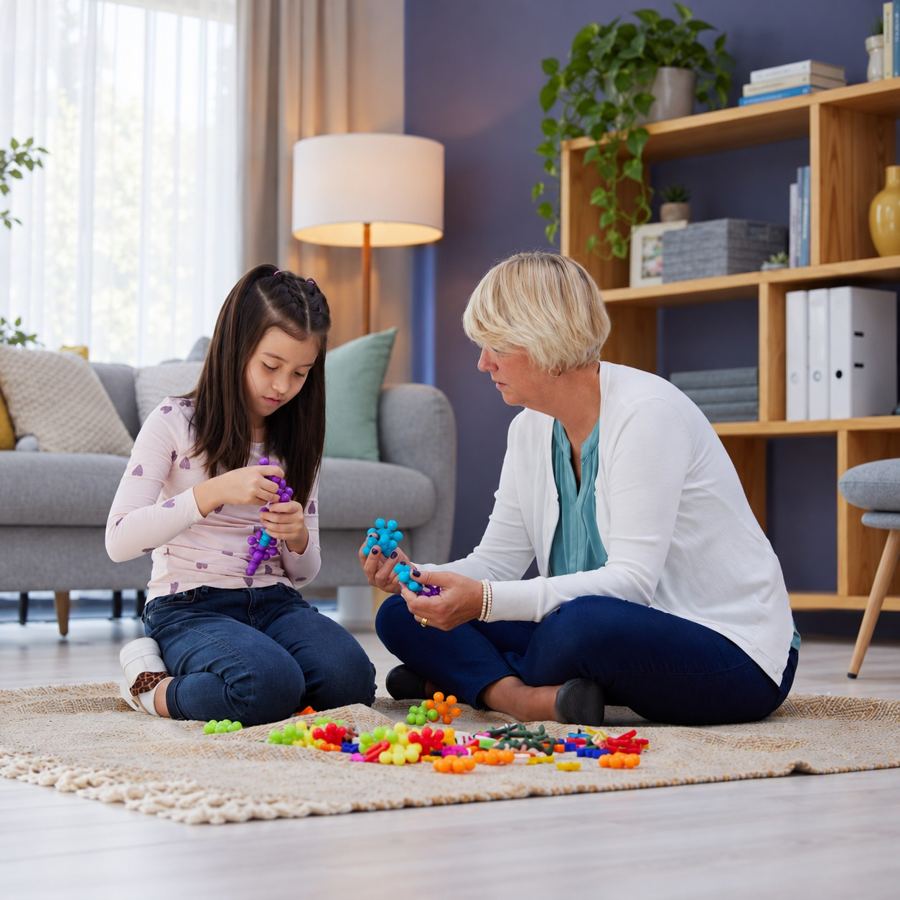
Occupational therapy helps children with developmental, motor, cognitive, physical, and speech delays become more independent, through specialized exercises and activities delivered at home, at school, or in a clinical setting.
Occupational therapy helps kids who are having trouble with everyday activities at home or school — or when a child's development doesn't seem to be keeping pace with their peers. Occupational therapists, or OTs, work with kids on attention and focus, sensory processing, the everyday activities they need to manage (also known as activities of daily living, or ADLs), visual-perceptual skills, and fine and gross motor skills.
OTs are different from speech-language pathologists, who focus specifically on speech and language skills — though many kids benefit from both types of therapy together, since they address different (and often related) pieces of a child's development.

Children with sensory processing issues have difficulty putting together information from their senses. The body takes in input from seven senses — sight, sound, smell, taste, touch, body awareness, and movement — and uses them to understand and interact with the world. When a child struggles to process this input, occupational therapy can help by building strategies that improve how the senses work together.
Kids who struggle to regulate sensory input generally fall into two categories: those who are hypersensitive (overly sensitive to stimuli) and those who are hyposensitive (under-sensitive to stimuli).
Hypersensitive kids can react strongly to light, sound, taste, touch, and smell — these things can feel overwhelming and make a child want to be alone. They may avoid playing with others at the gym, at recess, or at lunch because it feels too anxiety-inducing, and even something as small as buzzing classroom lights can make it hard to pay attention.
Hyposensitive kids, by contrast, are often perceived as disruptive, since they're constantly seeking out sensory stimulation — bumping into others, moving restlessly, or making noise. These kids are sometimes misdiagnosed with ADHD because of that disruptive behavior, when a sensory processing difference is actually the underlying cause.
The approach an OT takes depends on which direction a child's sensory needs run. For a child who gets overstimulated easily, a therapist might recommend a separate, quieter space for sitting and testing, to help control stimuli and prevent sensory overload. For a child who's under-sensitive and craves more input, therapists often recommend high-input sensory activities — swinging, jumping on a trampoline, or crashing into a beanbag — along with short sensory breaks built into the school day, like walking, stretching, or jumping jacks.
Fidgets and chewable items, like chewable pencil toppers, can also help soothe an overstimulated child and redirect their attention back to the task at hand. Some therapists also use brushing and joint-compression techniques — a more debated approach, believed by some to help the brain adapt to sensory input over time.
It isn't always easy to tell whether a child is hypersensitive or hyposensitive — a child who does well in some situations but struggles in others can be a sign of a broader sensory processing difference worth having assessed.
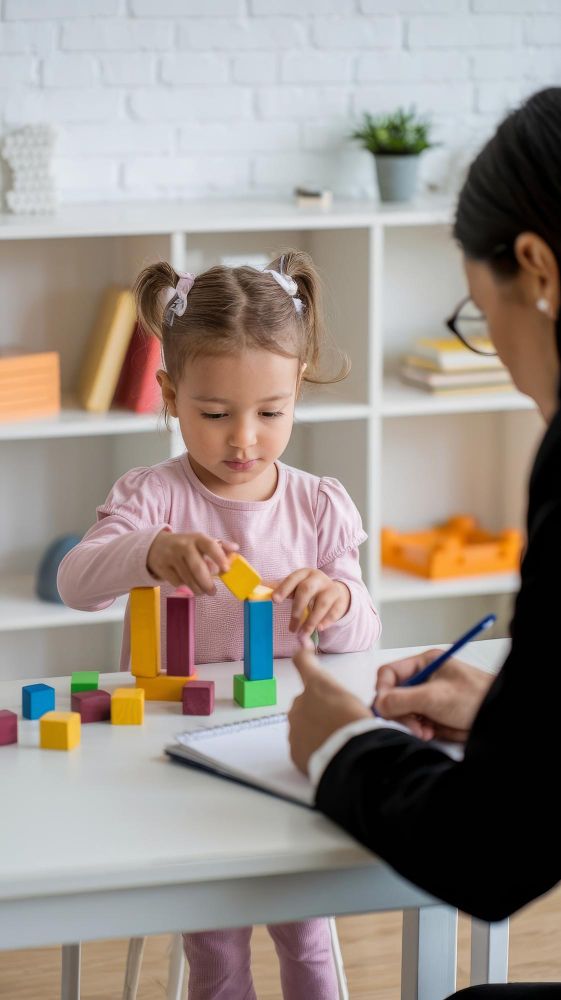
Motor skills fall into two broad categories. Fine motor skills involve the small muscles in the hands and fingers, affecting a child's strength and dexterity for tasks like writing. Gross motor skills involve the larger muscle groups, affecting balance, coordination, and whole-body movement.
Kids with underdeveloped fine motor skills often struggle to hold writing tools, manage tasks like stringing beads, or use scissors. OTs build these skills through play — dot-to-dot painting to strengthen a pincer grasp, picking up coins, shoe-lacing, tweezer games like Operation, and therapy putty for hand strength and dexterity.
When gross motor skills lag, it can affect a child's balance, strength, coordination, and endurance — and even chip away at self-esteem when it means missing out on recess or sports. OTs use ball games, obstacle courses, tricycle riding, and therapy-ball core work to build strength, balance, and coordination.
Self-help skills depend heavily on fine motor development, since tasks like buttoning, zipping, and tying shoelaces are what let a child dress and undress independently. Grooming — brushing hair, brushing teeth, using the bathroom — and eating both work the same way, requiring the motor skills to hold and manipulate tools like a hairbrush or utensils.
Sensory processing differences can add another layer of difficulty here: a child who's sensitive to wetness or restrictive clothing may need extra support building these routines. Small adjustments — like shopping during off-peak hours for a child who's easily overstimulated, or switching toothpaste flavors for a child averse to brushing — can make a real difference. Building these skills takes time and patience, but the payoff is real independence in everyday routines.
Occupational therapy for kids happens in a few different settings, depending on age and need.
OTs observe and collaborate directly in the classroom, helping build a learning environment that supports sensory and motor needs without disrupting the school day.
Dedicated one-on-one sessions, often at a specialized sensory gym, focus on fine and gross motor skill work — typically for children age three and up.
For children under three, home-based therapy is generally recommended, keeping sessions in a familiar, comfortable environment.
Book a free consultation and let's talk about your needs.