Support for social communication, language development, and functional communication — including AAC when helpful — built around each child's own communication style.
Autism Spectrum Disorder (ASD) is a neurodevelopmental condition that affects how the brain develops, with wide-ranging effects on communication, social interaction, and behavior. It's usually first noticed between ages 2 and 3, and it affects boys more often than girls.
ASD exists on a spectrum, meaning it looks different from child to child — some children need significant daily support, while others need help with more specific skills. There's no cure for autism, but early intervention and consistent therapy can make a real difference in a child's social and communication skills over time.
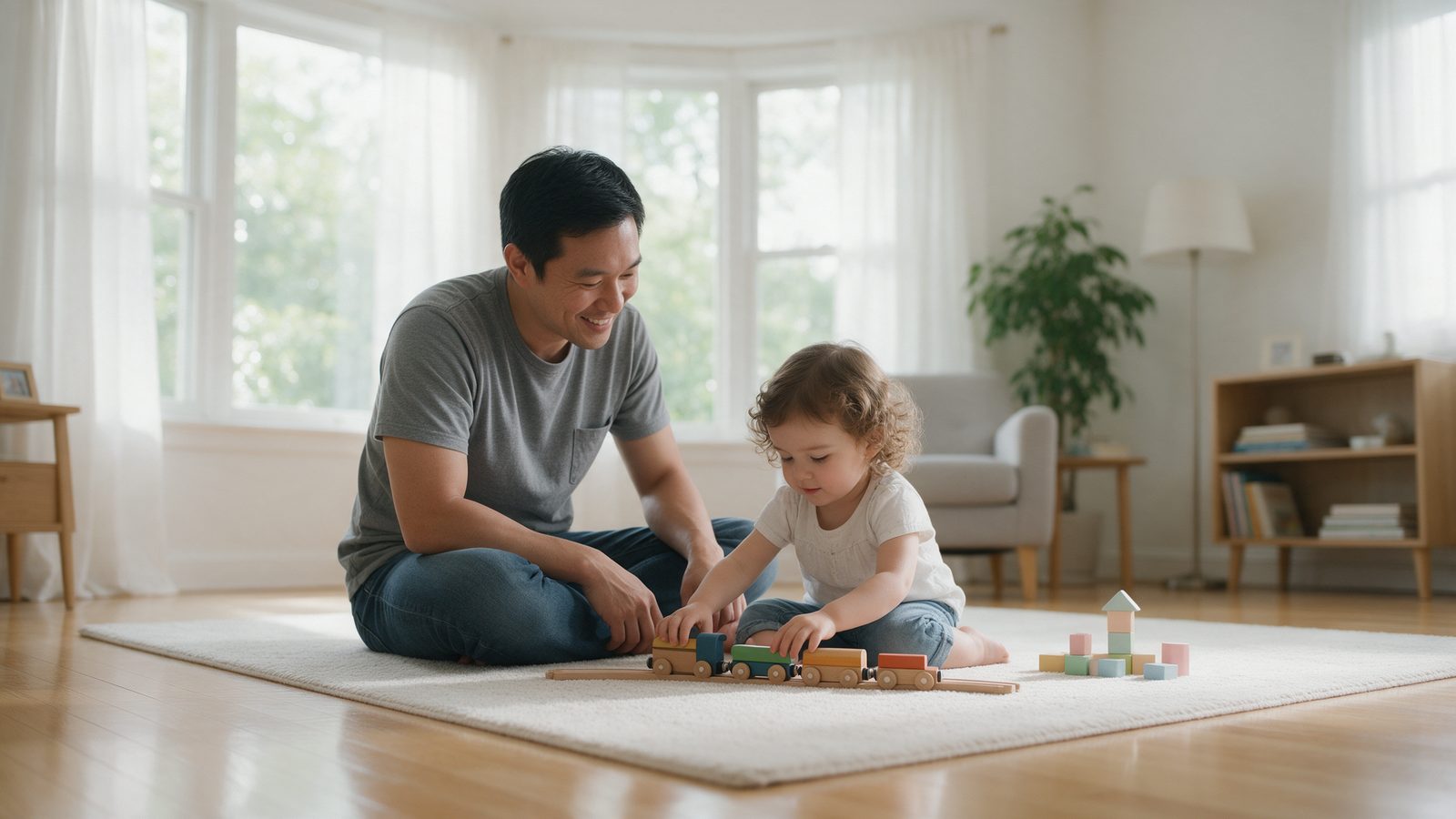 Every child on the spectrum communicates and plays in their own way.
Autism can show up across a few different areas of a child's development — social communication, language and cognitive skills, and behavioral or emotional patterns.
Every child on the spectrum is different, but a few patterns come up often. Socially, a child may not respond consistently to their name, show less interest in the people around them, or seem to prefer playing alone — though preferring solitude isn't, on its own, the same thing as autism.
Communication challenges can include delayed or unclear speech, difficulty building full sentences, repeating words or phrases back (echolalia), and trouble picking up on tone of voice, gestures, eye contact, or other non-verbal cues.
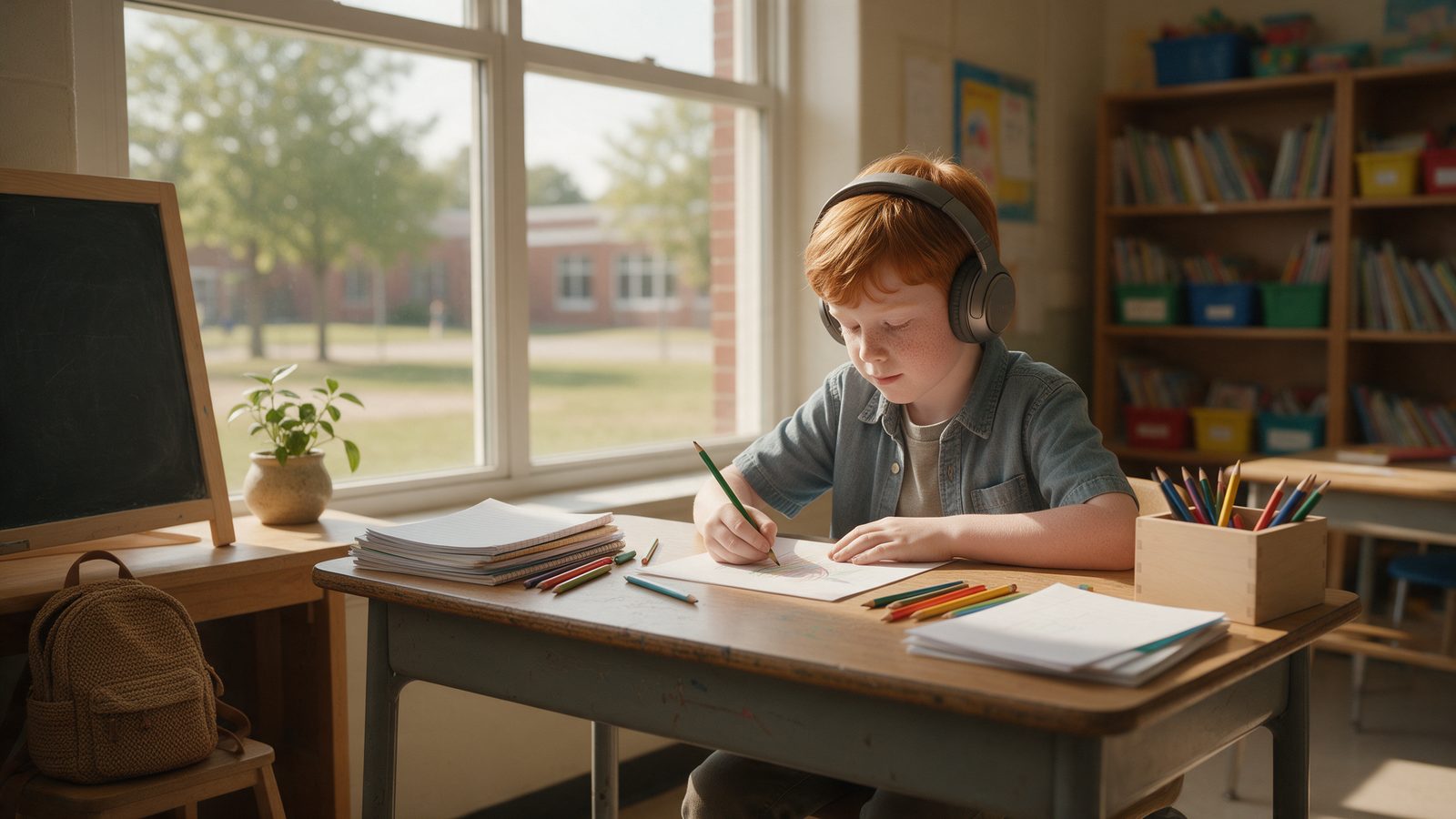 Sound, light, and busy spaces can feel overwhelming — the right supports help.
Once a diagnosis is confirmed, speech therapy is typically the most effective next step, guided by a licensed speech-language pathologist. Therapy is built around each child's specific needs, and often works on several skills at once — non-verbal communication, social skills, conversation skills, grammar, prosody (the rhythm and tone of speech), pragmatics, body language, and asking and answering questions.
We aim to build functional communication that works outside of a therapy session, not just inside one — so a child can use these skills at home, at school, and with friends.
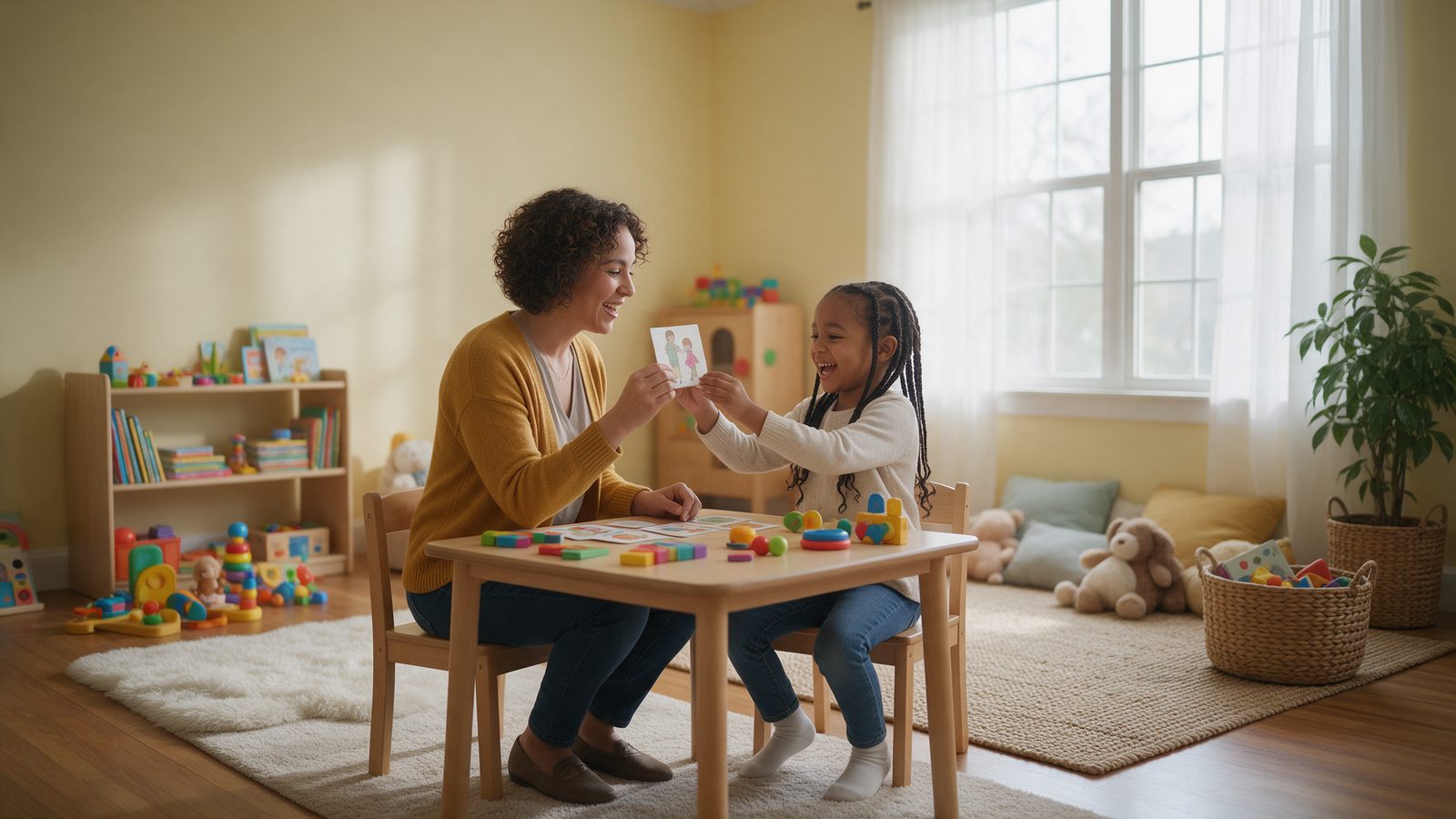 Play-based, relationship-first therapy that builds real communication.
Therapy sessions are hands-on and relationship-based. We might place a motivating object just out of reach to encourage a child to communicate for it, use gestures and expressions to model language, and reward the behaviors we're working to build. Parents are welcome to be as involved as they'd like — some like to actively participate in sessions, while others prefer to let the therapist take the lead — but parent involvement, in whatever form works for your family, makes a real difference in how quickly skills carry over into daily life.
Over time, the goal is for your child to become more aware of their social environment, build a stronger sense of self, recognize and communicate about the things around them, understand emotions and how to respond to them, take part in real conversations, and build relationships with the peers in their life.
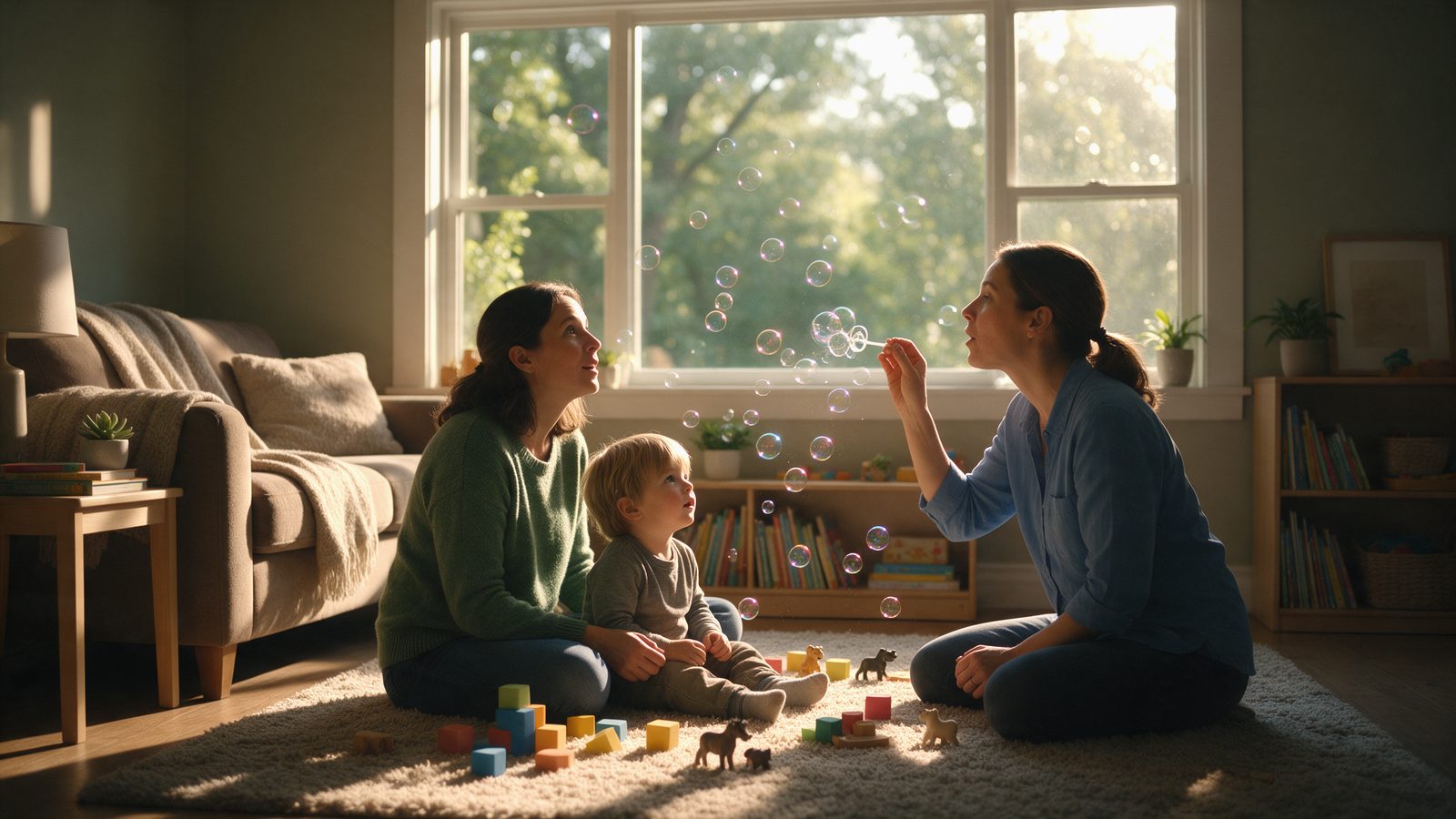 Parents join the session so progress carries over to home.
Call, text, or fill out our form — we'll set up your free consultation within 24 hours.