Speech and language support for children with hearing differences, coordinated with audiologists and other specialists as needed.
Hearing words and sounds is how children learn to talk and understand language, so even a mild hearing difference can affect that process — especially in noisy environments, where certain sounds or words can be missed entirely. Hearing loss in children is more common than many parents expect, affecting close to 2% of children, with a smaller share experiencing permanent hearing loss. Left unaddressed, it can delay speech and language development and lead to challenges with friendships and schoolwork — which is exactly why catching it early makes such a difference.
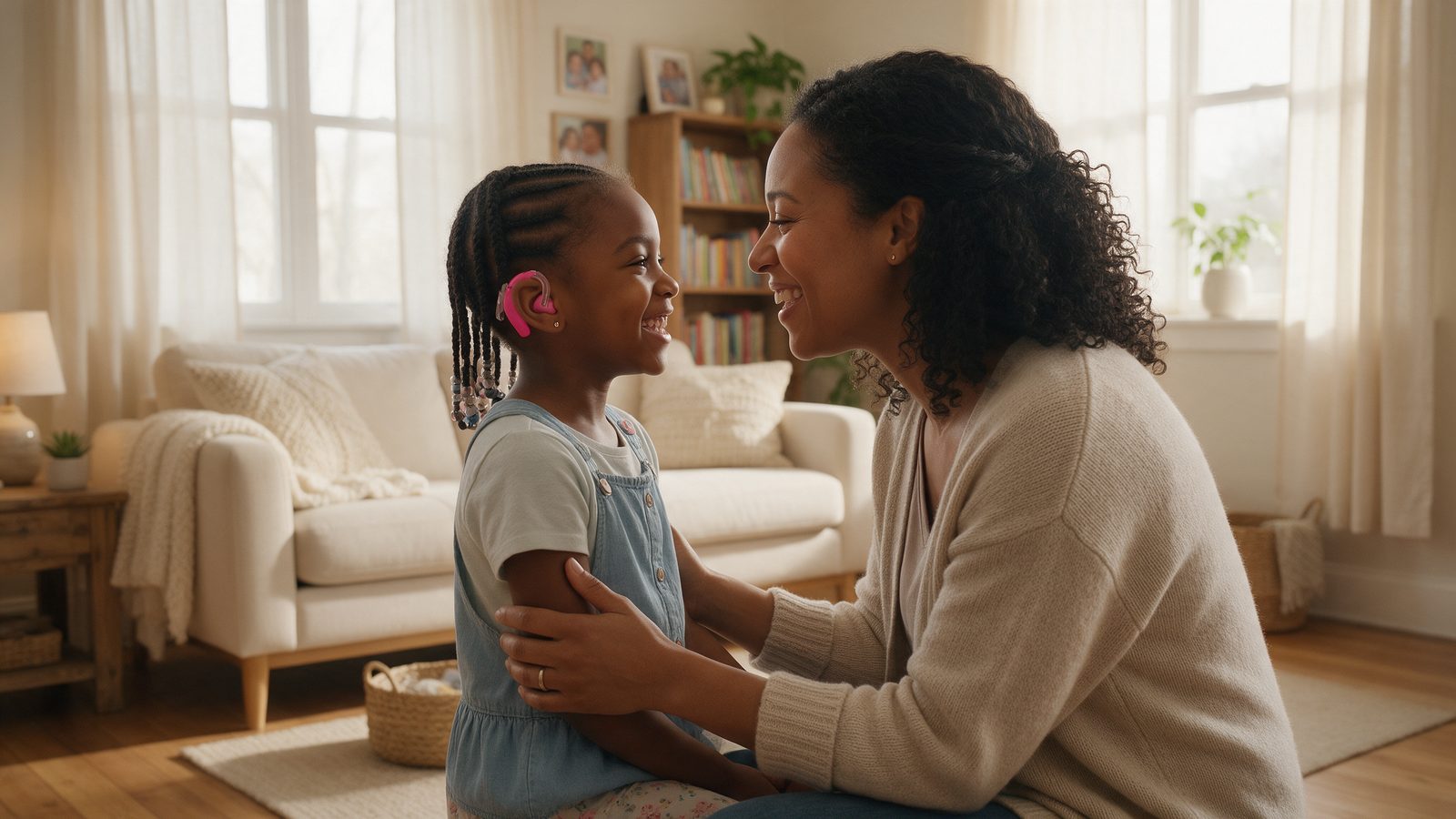 Hearing shapes how speech and language develop.
A few early milestones are worth watching for in infancy, and a few different signs tend to show up in toddlers and older children.
Hearing loss can be present at birth or develop later, and the causes vary quite a bit. Some children inherit it genetically — this is actually the most common cause of congenital hearing loss — while others develop it from an infection during pregnancy, birth complications, certain genetic syndromes (including Down syndrome, Usher syndrome, Waardenburg syndrome, and others), or being born prematurely. In older children, common causes include frequent or untreated ear infections, complications from illnesses like measles, mumps, or meningitis, a head injury, a perforated eardrum, certain medications, or repeated exposure to loud noise.
Even ordinary ear infections can affect hearing temporarily — fluid left behind after an infection clears can muffle sound the way being underwater does, which is worth knowing if a course of antibiotics doesn't seem to fully resolve things.
One cause worth calling out specifically is congenital cytomegalovirus (CMV), a common virus that poses particular risk to unborn babies and is one of the more preventable causes of congenital hearing loss. A few simple habits during pregnancy and early infancy lower that risk meaningfully.
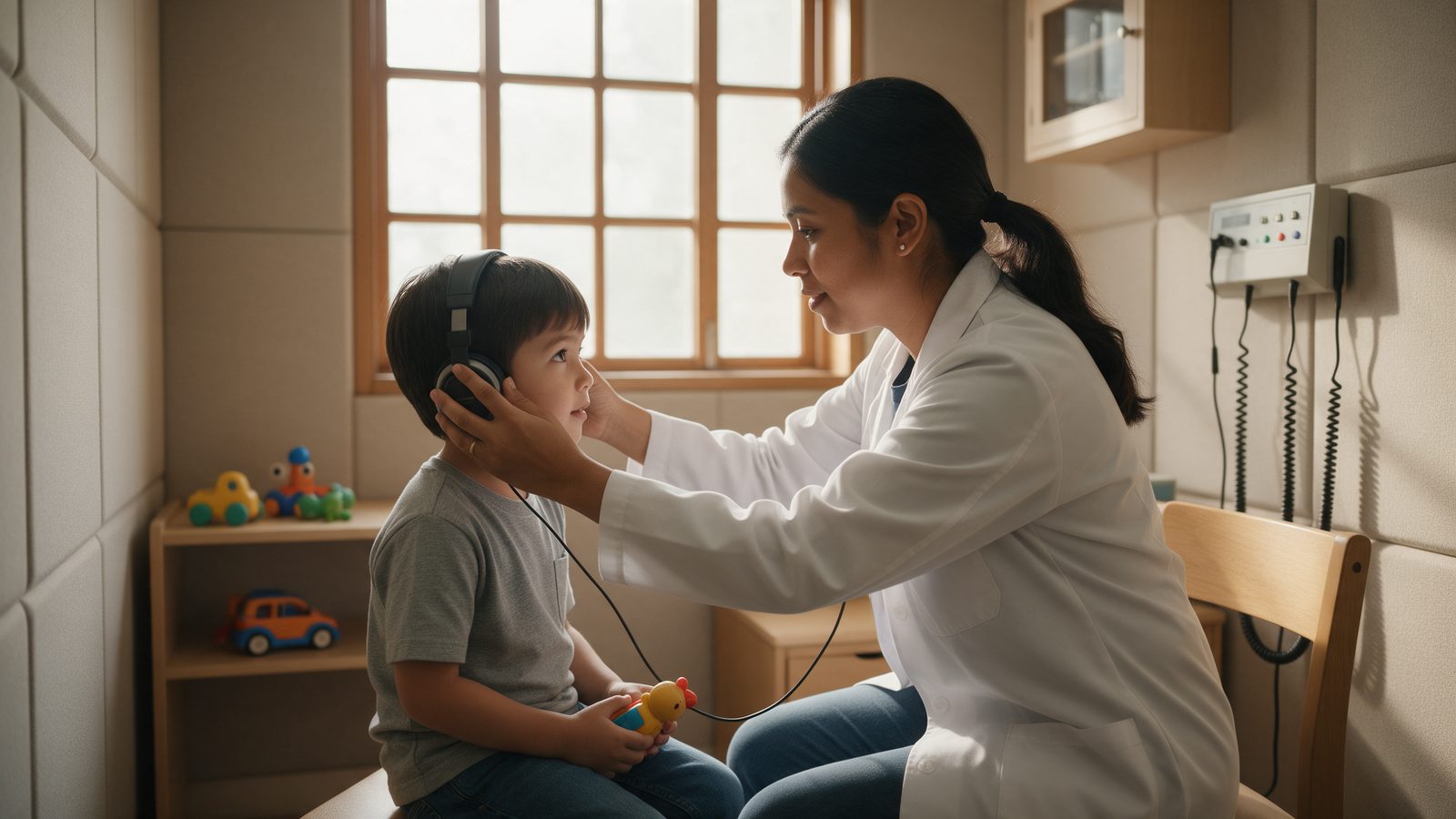 A hearing test is the first step.
Your pediatrician is the right first stop, and they can refer you to a pediatric audiologist or ENT for a full hearing evaluation — including, when needed, testing that measures how your child's brain responds to sound. Timing matters: children identified at birth or shortly after ideally start therapy within six months, and for children diagnosed later, starting as soon as possible gives them the best foundation going forward.
If you're not sure whether it's worth pursuing an evaluation, a simple at-home check can help: stand behind your child while they're occupied with something else, then try playing music from a favorite toy, gently saying their name, or making a few different speech sounds to see which ones they notice and respond to.
 If you suspect hearing loss, act early.
Treatment is built around each child's specific hearing profile and often involves close coordination with an audiologist and, when needed, a teacher of the deaf — checking that hearing aids, cochlear implants, or an FM assistive listening system are working well, and building a plan around your child's needs. From there, speech therapy focuses on the everyday building blocks of communication: eye contact, turn-taking, and initiating interaction, alongside speech reading, auditory training, and adjustments to a child's everyday environment to make language easier to access. We also do direct work on speech clarity and on both understanding and expressing language, whether that's through spoken language, sign language, or both.
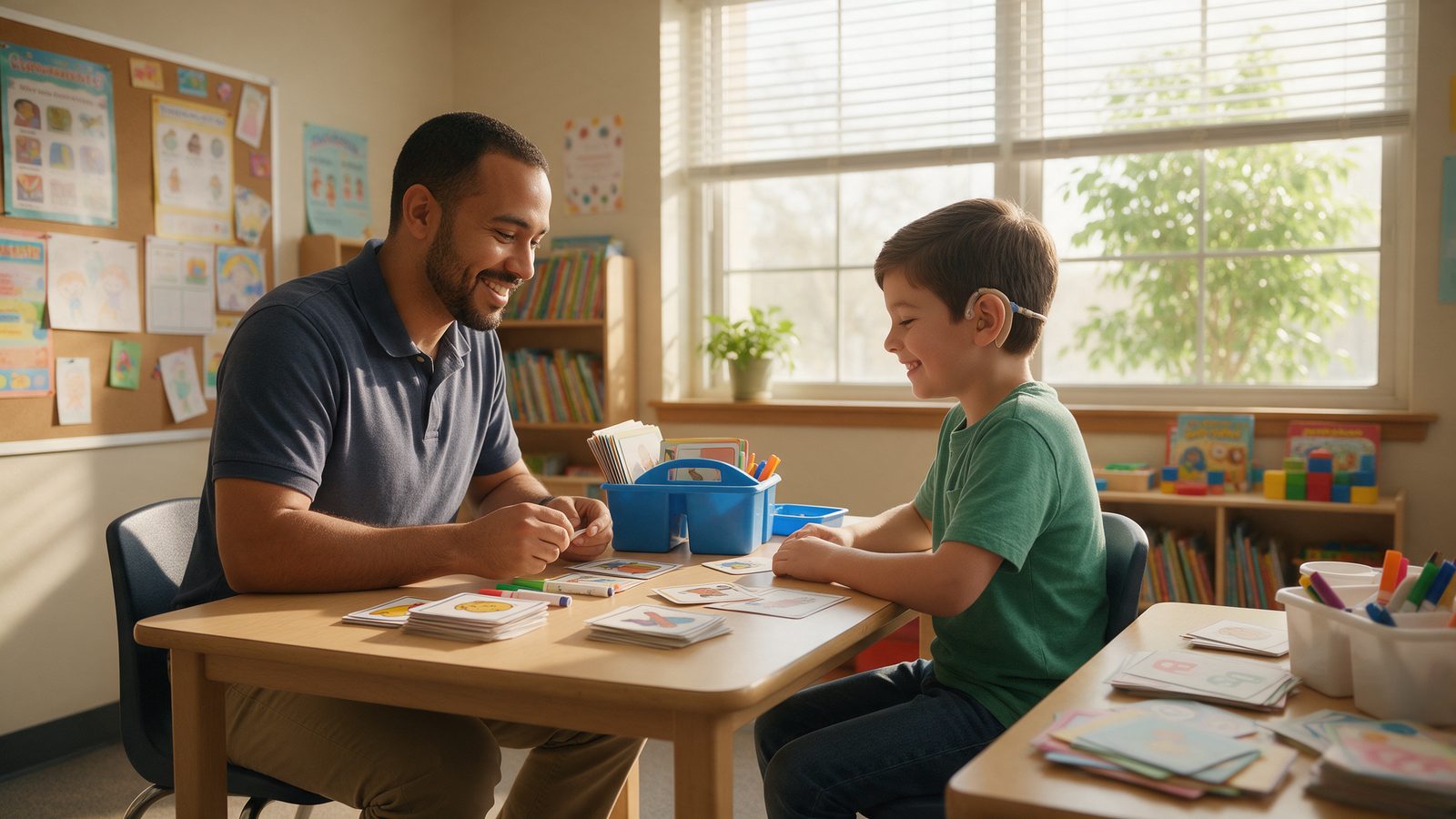 Therapy builds listening and speaking skills together.
Call, text, or fill out our form — we'll set up your free consultation within 24 hours.