Introducing cups to your toddler can be a little challenging and time-consuming. For this reason, it is normal for toddlers and parents to prefer the comfort and familiarity of keeping the bottle for a long time. Unfortunately, this is not appropriate for our kids’ oral motor skills development. Our detailed guide gives you the appropriate tips and strategies to help your baby transition from baby bottles to open cups. When you follow these tips consistently, your little munchkin will pick up the skill quickly and you can say goodbye to bottles in favor of age appropriate cups.
Your infant should be drinking from an open cup by their first birthday. That may appear far away, but know that practice makes perfect so starting early can be helpful! It is OK to begin practicing drinking from a cup after your infant is six months old and starting to eat solid food. Training your baby to take drinks from a cup now will make transitioning from breast to bottle much smoother, and it will assist them in developing crucial fine balance and coordination skills. As soon as six months, babies can start drinking from an open cup held by a parent.
It could become a little messy, and some spilling will occur. The bathtub is a pleasant and inviting alternative location to begin the messiness of practicing cup drinking! Allow your toddler to be messy while learning and do the cleanup after that, all in one convenient location. It is ideal for babies to be totally off the bottle by the time they reach 11 to 12 months to allow for normal oral motor development and growth. The earlier you start practicing with an open drinking cup, the simpler it will be to move from the bottle to the cup.
The good news is that you do not need to choose between a straw cup and an open cup. You can introduce both at the same time! Begin with whichever you want—there is no right or wrong way of doing it! While some specialists prescribe a certain order, there is no evidence that practicing straw cups first and then open cups, or vice versa, is beneficial.
We suggest starting with both types of cup at different meals if your toddler is six months old. For example, a straw cup at breakfast and an open cup during the next meal. After some weeks, if your baby is struggling with both cups, select the cup they prefer, and continue using it until your toddler is comfortable using it. Then you can reintroduce the other kind of cup so they’ll eventually master both varieties.
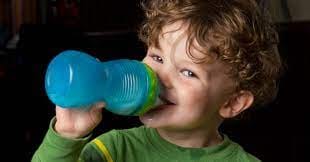
There are numerous tactics you can use to assist with the learning process while training your child to sip from an open cup. To avoid spills and promote good pacing, begin with a tiny cup with a gentle rim and a small quantity of liquid. For example, a Dixie cup. It is critical to allow training with a range of drinking cups and avoid using sippy cups with a hard spout. It is not mandatory to introduce sippy cups as an intermediary step between the bottle and a regular cup, but if you must use one, choose cups with gentle spouts to ensure your child’s oral motor skills are improving as they learn.
Lidded cups and 360 cups are a wonderful alternative if you are afraid of spillage or require a closed cup for traveling. These enable their skills to grow while also reducing the amount of mess that caretakers have to deal with. If traveling with a sip cup with a soft spout, continue to utilize open drinking cups at snack time and mealtime for the best results. At 22 months, most babies can hold an open cup with one hand drink and drink comfortably without liquid loss.
As early as the newborn stage, your baby can begin to learn about open cup drinking by learning to keep the cup spout in contact with their bottom lip. Give your kid time to adjust to the liquid going into their mouth by moving slowly and gently. When they are six months or older and you begin open cup drinking training, try to keep the cup close to their lips, tilting it up and down to allow for sipping. This process works best when done slowly, so make sure you incorporate breaks while keeping the cup in contact with their lips, and avoid taking it away immediately when they take a sip.
While they’re sipping, encourage your toddler to grasp the cup’s edge with their teeth to improve jaw stability. Also, experiment with changing the liquid’s thickness to allow the kid to control the beverage flow rate and manage the liquid in their mouth. Making smoothies, utilizing baby artificial Thick-It, and rice cereal are good options for thickening beverages.
If your baby coughs after eating or drinking, they may be breathing in the liquid. Stop feeding your baby and visit your doctor when you observe consistent coughing. Several factors, such as liquid thickness, swallowing issues, and liquid flow velocity, might be at play. Before continuing, you should discuss your experience with your physician to evaluate the best possible options for your kiddo.
Your little champion will become a successful cup drinker in no time when you follow these suggestions and strategies early on. The key here is to wait patiently, it’ll take some time because it’s a trial and error process, but eventually, your kid will master the art of drinking with an open cup of every variety.
Book a free consultation and let's talk about what you're seeing at home.